Goodbye

Ali got out of the car.  It was cooler up here, in the hills.  Los Angeles would be oppressive by now.  She felt a breath of wind pass over her hair.  Yes, this would be a better spot for the shoot.  She could see it all now, the models changing in a trailer here in the car park, then her taking the shots against the background of the city grid laid out underneath, and the ocean sparkling in the background.  She followed the trail signs to the viewing platform .  There were a few elderly people there, but it was late enough in the afternoon for there to be no crowds.  Just right.  

There was a diamond-shaped yellow “Photo Spot” sign on one end of the platform.  She walked along and stood to the left of it.  It must have been put there by a man wanting to direct everyone to the ideal spot for a shot.  How irritating that she automatically confirmed like that.  It was a good prospect, she had to admit, even so.

On the right side of the sign, Len, who had been gazing at the view when she arrived, turned and looked at her. He thought she had the same skin as his dead wife, Stella, as a young woman: smooth, olive, bronzed, beautiful. Stella was the only thing missing from his life now, but that was enough to make it a swamp of loneliness.  The pang of her memory made him blink.

Ali was thinking about framing, looking through her camera and adjusting its settings.  She wondered what he was looking at.  Judging her, just as her father used to – she could hear him now “No Dear, that’s not how you do it.” This old guy was about to tell her how to photograph the hazy scene so that it was clear,  how to increase the depth of field – he was, she knew it!  Another damned mansplainer trying to tell her, HER, how to do her job.  

“It’s changed a lot here,” Len said.  She even had the same concern with details as Stella, he thought.  She wanted to get the picture perfect.  It looked like an expensive camera.  She was clearly doing well in life.  He thought about his own success, which most people, he imagined, would consider substantial.  He had sold his printing company, after twenty years of building it up and opening outlets right across California, to a large high street chain and he’d  made a few million dollars.  He had stopped work at forty, and had planned to spend his life with Stella doing what they loved most, travelling.  When she fell ill ten years later, he could not imagine life without her.  They had been childhood sweethearts at school.  She was the only woman he had ever loved.  And where was he now?  Washed up on the shores of his upbringing, unable and unwilling to move from LA., struggling to find meaning in his existence. And here, now was this beautiful young woman beside him, capable, self-sufficient, doing what she was good at and loving it.  He envied her.

“I wouldn’t know about change, “ she said, without turning to look at him. “I haven’t been here before.  Too many tourists for me.”

“Ah, yes.  And there is the smog, more now than there used to be in the days when I came here first with my wife, Stella.  They’re trying to reduce emissions in LA, but I don’t think it will do much good to be honest.”  

He had a point.  The smog was annoying and difficult to penetrate, no matter what the settings on the camera.  Maybe she should look for another place.  Time was running out though, she had to be on a plane to New York in three hours.  She thought about her husband who was probably right now having lunch somewhere trendy with a client.  They had met on a shoot when she was an assistant to a famous photographer and he was just starting out in the ad agency where he was now a director.  How time flew.  Their children, a boy and a girl, had both now left home and were both very ambitious and successful in corporate finance and management consulting.  She wondered when she would see them again.  It had been months.  But she had slowly got used to their absence.  She supposed it was a good thing, but she often felt that they really didn’t need her anymore, and would probably not even notice if she wasn’t there.  But that was stupid: of course they needed her.  Just in a different way, now.  And she was slowly getting her head around being a free agent again.  Funny how she had spent many years as they were growing up wondering if she should have let her career come first.  Now she had the time and space to focus on her work, she was always thinking about when she was the centre of their worlds at home.

This was the first full time project she had attempted since the children had left.  She wanted it to be amazing.  But she could tell that she was still a little rusty on the basics of managing the project and getting things organised.  Budgets were tight, and she had to show the client a plan in two days time back in New York.

There was a risk she would never hear the end of it, but nevertheless she turned towards Len and asked, “I don’t suppose you know of somewhere else with a less smoggy view?”

He saw she had the same way that Stella had of raising one eyebrow when she asked a question.  He smiled. “Sure,” he said. “See that hairpin bend just down to the left over there?  Underneath that clump of trees?  You can scramble down from the road, and round on the other side there is a big flat rock, hidden from view.  There are no trail signs to it, but it is the best place around here, and there will be nobody else there.  For some reason the sunlight doesn’t bounce off the smog from that angle, and you will get a lovely view of the city.”

She resented needing to ask this man for advice.  “Listen, thanks.  That’s very kind of you.  I will give it a try, “ she said, and turned to walk back to her car.

What a lovely girl, Len thought.  Shame he wasn’t thirty years younger.  Thirty years ago, what was he like then?  Struggling to keep his head above water.  The printing business was cut-throat and he was working all hours to fulfil customer orders.  He had some good people working for him, but none of them really thought about it as a career.  He hadn’t either, when he first got started.  He dropped out of school at 18 with barely any qualifications, disappointing his parents, who were school teachers.  He took jobs flipping burgers, serving drinks in a bar on the beach, even driving a delivery van for a local grocer.  None of them lasted long.  Then finally a friend from school said that they were looking for new people at the print shop he worked at.  Len went to see the owner, and was hired the next day.  He found he loved the work, the detail, the precision.  Thirty years ago he had just opened the first shop of his own, and was adjusting to the new responsibility he had for his staff and his clients.  It was hard, but the business was beginning to take off, and he felt he had some decent prospects and could at last propose to Stella.  Of course, Stella didn’t care about his prospects, she just wanted to be with him for the rest of her life.

“Hey, no sweat.  There’s nothing like a bit of local knowledge,” Len said.  Ali turned and set off to her car.

The SUV she was driving snaked down the road towards the hairpin, rounded the corner and disappeared from view.  Len turned back to look some more at the city.

Ali stopped the car by the crash barrier, retrieved her camera bag from the back seat, and looked over the edge.  There was a steep, rocky drop of about twenty feet down to a small track which led around a corner to the right.  She stepped over the barrier and scrambled down the drop feet first, her hands behind her back in the sliding stones.  She followed the track and came upon the flat slab which Len had mentioned, sticking out over the valley.  She sat cross-legged at the edge and looked at the view.  He was right.  It was magnificent, and there was plenty of room on the slab for the equipment and the models.  Getting down here would be a challenge but she was sure they could work something out.  The sun was falling in the sky, and the city was clearly visible, as Len had said it would be.  It was awesome.  She took some shots and wrote some notes down in her exercise book.  She laid the kit down beside her and closed her eyes.  She felt peace.  Her mind turned to the journey home, but she really did not want to leave yet.  Five more minutes wouldn’t make any difference, she thought.  She remembered once feeling the same way on the beach at Cape Cod, as a child.  Her parents could not get her to come in for dinner.  She was mesmerised by the sky.  As always, it was her father who came down and pulled her to her feet and spoiled the moment.  “Really, Dear.  It’s time.”  He’d never had time for the important things in life.  

Behind and to her left she heard a fall of rocks.  She looked back along the track but could see nothing.  Then she heard it again.  She got to her feet, wondering if there was some kind of avalanche starting.  As she turned, Len appeared, brushing dust off his anorak.  What was it with people, she thought?  Why could they not just leave her alone occasionally?  

He raised his hand in greeting, but was too out of breath to speak.  Thank goodness, she was alright.  On the way down the road he came across her car on the bend, and worried that she might have injured herself.  It was starting to get dark.  You could never be too careful.  In any case, he wanted to see how the city looked from here, thirty years after he had last seen it with Stella.  “Hi, are you OK?” he croaked, hands on his knees, fighting to regain his breath.

Yes, there he was.  She’d had a feeling that he was going to be difficult to shake off, and she was right.  She rolled her eyes and said, “I’m fine.  Are YOU OK?”  He looked like he had rolled all the way down the drop.  There was dust all over him, even in his hair, which was waving now in the breeze.  These guys think they are Superman, she thought.  Indestructible.  

“I saw your car at the top and I was worried that it was getting dark and all,” he said.  “Thought I would just check you hadn’t fallen or something.”  He had had to be very careful getting Stella down here that last time.  It had taken them ages to get to the slab, and then even more time to get back up to the road.

“Oh, well… as you can see, there is nothing wrong with me.  I am done here, so I was about to head back up,” Ali said.  He was the one who was going to need help, she thought.  She couldn’t just leave him.  She led the way to the foot of the drop.  She persuaded him to go up first, so that she could break his fall if necessary.  They inched up the slope, stones and dust falling into her eyes and hair.  They got to the top and stepped over the barrier.  She held his hand as he put his front foot onto the road.

“Are you going to be alright driving?” she said.  Then immediately wondered what she would do if he said no.  Drive him home?  Please, please say you can drive, she thought.

“Oh yes, I’m a great driver,” he said.  Stella had always told him that.

“You might want to think twice before going down there again,” she said.  “Goodbye.” 

The SUV’s tail lights receded into the night. “Goodbye,” he said.  “Goodbye.”

Something, Something, I, T

From the corner of her eye she watched the man as he made several attempts to put his bag in the overhead rack, gave up, and squeezed it into the space between the seats. She could see beads of sweat appearing on his forehead. 

She raised her book so that he could not miss the title:  “How to Get Ahead in Business Without a Penis.”  It was usually sufficient to discourage small talk.

Laughing quietly, he said, ‘I thought MY baggage was onerous.’

 “It’s society’s baggage, not mine,” she fired back. Who did he think he was?

His eyebrow arched, he looked away with a straight face, unfolded the Metro to expose the crossword, and started to study it.

Should she sit there holding the book up until London? Or should she wait a few more minutes and then put it down? If he asked for her help with that puzzle it would be intensely irritating. She settled for holding the book open, keeping her place with her thumb, and laying it on her lap, closing her eyes and pretending to snooze. 

Found on the bottom of a parrot’s cage: something, something, I,T,’ he muttered, wrestling with a clue. “Can’t be, can it?… Hmmm. Well, OK then.” 

Suddenly it came to him. ‘Ahhh! No! … GRIT!… Ha!  Pass me the rubber, Vicar,’ he laughed.

Despite herself, she found this puerile joke funny, and could not help an inward snigger. After regaining composure, she opened her eyes slightly and saw that he was fast asleep, with the newspaper slipping off his pin-striped knees.

She looked out of the window until they reached Battersea Power Station.

They were pulling it down.  Progress, she supposed.

The Man at Number 84

I read somewhere once, or maybe my poor old Tom told me, that shy people use body language which can easily be mistaken as aggressive.  So, being an open-minded woman, I try not to judge quiet people too quickly.  But this new bloke at Number 84 takes quiet to a whole new level.

He moved into the house at the end of our little street a month ago.  I suppose I have seen him twice a day since then.  Good mornings are about as far as we’ve got so far.  He wears thick lenses with round frames, which make his eyes look big, and therefore emphasise their reluctance to meet my gaze.  

He sets off on foot every morning about 8am, I suppose to the railway station, not exactly in a hurry, but walking briskly past me with his briefcase, as if saying: look, I don’t have time for you –   things to do, people to see. You know the type.

Since I am not the most talkative of people myself, I have let this pass  till now, but to be honest I am starting to find it a bit rude.  Why do I care?  Well, that is a good question.  I suppose it would be nice to be acknowledged at least.  This morning he was wearing corduroy trousers and a matching jacket all in a rusty orange colour.  That jars, is what it does.  I mean, to me the clothes say: look at me!  I want to be noticed. But everything else about him says the exact opposite.

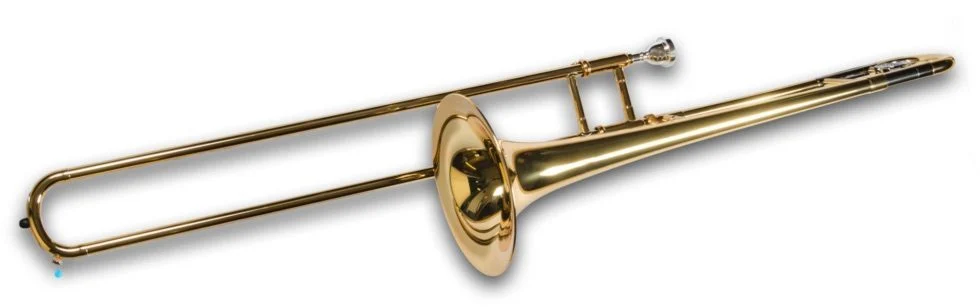
He’s got lovely hands though.  I noticed that yesterday.  Manicured I should think.  He obviously works in an office, and not outside somewhere.  Long fingers, like a piano player.  Maybe he is here rehearsing for a concert somewhere.  Yes, that’s it.  And he has to rush off every day to try out new ideas with the orchestra. I should just stop him and ask him outright, no beating about the bush.  What is it?  Piano?  Guitar?  Trombone?  No he hasn’t got the lips for a trombone, they are too thin.  It would be nice to know though.

Maybe I should be asking myself what has happened to make him behave like this.  Perhaps I should leave him alone – if that’s really what he wants.

It’s a big old house, that one at the end,  and I wonder what he is doing there all on his own.  I haven’t seen anyone else going in or out since he moved in.  I think I would be lonely if I moved to a new town and didn’t know anyone in the road I lived in.  Having said that I am not sure I would want people invading my space and pressuring me to chat.  I would probably find that uncomfortable.  

So I am thinking that I should try and let him know that I get it.  And if he doesn’t want to meet his neighbours, that’s fine by me.

He must be in his late 40s I reckon, with fair, ginger hair thinning on top, unkempt.  Not married it seems.  Not that that matters nowadays.  I looked in his front window, no curtains there yet, as I walked past yesterday. There are still packing cases, unopened on the carpet.  Piled high they are.  I wonder where he lived before.

I should mind my own business, but it’s very hard not to notice things when you are as observant as I am.  Not much gets past Annie, they all used to say,  oh no, especially after old Tom went.   

I always think: you never know what’s going to happen, do you?  We could wake up one morning and there could be a police car outside his house and he could be found dead at the bottom of his staircase.  And the police would be round asking everyone what they noticed, wouldn’t they?  And I would feel stupid if I hadn’t made a few mental notes about him during his short stay on our road, wouldn’t I?

I mean, he could be recently divorced. Forced out of his own house and into a strange place while his wife takes the kids and starts a new life.  And he’s left on his own, struggling , but too shy to ask for help.

Perhaps he’s foreign, that’s it.  He’s come here to work for a bit, for a multinational.  He’s probably been to many other countries during his career, and he’s a bit of a workaholic so he’s had no time for getting married or having children.  The work might be vital to national security, and that’s why he can’t talk to anyone about who he is or what he does.  He doesn’t look foreign, but these days it’s difficult to tell.

Or what if it turned out that he was running away from an international crime syndicate, lying low.  The last thing he would want is for people to be poking their nose into his life.  He’d just want to steer clear of strangers, not talk to people, rush past and pretend that everything was alright.  When obviously it isn’t, is it?

That’s me catastrophizing, as my poor old Tom would call it.  Things never turn out as badly as you think they are going to, he used to say.  Except in Tom’s case, they did.  

It’s at times like this that I miss him most.

A mull on a gull

An early morning dog walk on the beach

With just a gull aloft the chill North wind.

Above the stony slope his plaintive screech

Cutting through the biting gusts in ears and mind.

Rattling pebbles rushing out to sea beneath

The silver-lipped, blue green swell of the Swale.

Seaweed left behind coiled in shimmering wreaths

In memory of last night’s thundering gale.

Scarcely shifting shape to surf the breeze,

Peering side to side in search of food,

The gull’s unruffled, glides with ease

Bright white against the brilliant blue.

This is why we live here, this is why

We hold the gift of life beneath this sky.

The Original

Sunlight shone through the original wooden-framed windows and filled the bedroom. They swung their legs down, on opposite sides of the bed, pausing for a moment back to back, looking down at the bare floorboards. Neither of them had slept.

Ian had lain all night listening to Rosie next to him, waiting for her breathing to slow and become somnolent. It didn’t. She had turned back and forth under the summer duvet. His thoughts had been racing faster and faster. What would they say at work? What would his parents say? What should he do next? What was going to happen to them?

He made his way down the creaking stairs, in bare feet and shorts. He made their teas – English Breakfast for him, Earl Grey for her. Rosie joined him on the deck. They sat at the small, round orange-painted metal table, looking out over the beach to the sea. There was silence except for shrieking gulls and the waves lapping on the pebbles below. Usually he would have sung her a nonsense song with her name repeated often in it, to the tune of the muppets’ manamana. It didn’t seem appropriate this morning, as if there would never again be anything to laugh at between them.

He had not yet looked at himself in the mirror, but Rosie’s face was still and her eyes red and sad. He thought he must look worse.

“You’re quiet,” he said, looking at a fishing boat leaving harbour for the day.

“What do you expect?” she said, sniffing.

For what must have been the hundredth time since the previous evening he said, “I’m sorry.”

“Which bit are you sorry about exactly? Lying to me all that time? Running off with that boy? Not even giving me a baby to show for all this?” She was wiping away tears now, shaking her head as if trying to rid it of something.


“All of that. I’m sorry about all of it.

***

In January they met in the Napoli cafe on Kingsway, near Rosie’s work at Lincoln’s Inn. They sat next to each other in high chairs looking through the window. It was grey, wet and cold.

They wanted to agree the five examples of his unreasonable behaviour.

“Well, we can get the obvious ones out of the way first,” she said. She rummaged in her oversized bag for her battered notebook and opened it, curled receipts and dog-eared post-its falling out as she flicked the pages.

“He spent all his time in the evenings playing a flight simulator game on the computer, and I felt lonely,” she read out.

“OK, agreed,” he said.

“He never wanted to talk to me at breakfast time… and I felt lonely,” she continued.

He could see where this was going. “But,” he said, “we always had a laugh at breakfast… about the marmalade in your hair, or the sound the honey made when it came out of the squeezy bottle.”

She laughed. “That’s as far as I’ve got,” she said, resting her forehead in her hand. She brushed her hair back off her face. “Suggestions?”

Ian had thought she was going to come with the complete list. He had not been expecting to contribute to his own incrimination. “I suppose there is the obvious elephant in the room, right?” he said.

She put her pen down, crossed her arms and fixed him with her brown eyes, tapping her foot on the stool, arching her eyebrows. “What are you talking about?”

He pointed at the unfinished list. “Write this down: ‘He wants to shag gay boys’. That should cover it,” he said. “I feel it would be authentic to include that one, don’t you?”

***

Five days later Elizabeth, his solicitor left a voicemail saying the application had arrived from Rosie’s solicitor, and did he want to know what it said. He called straight back.

She went over the first four examples. “And the last one… ” she said. “‘Has left the marital home to pursue a homosexual lifestyle’.”

***

It had been ten years. Ian called Rosie’s house number in Kent from his flat in Limehouse. She always answered that one. “Look, I can’t really talk much,” he whispered into the phone. “Please call the police, Rosie. There are people, dealers I think, waiting for me outside the door. I can hear them talking about me.”

“You IDIOT! You’ve been taking drugs with those bloody flatmates of yours again haven’t you?” shouted Rosie. She hung up.

He waited, his ear pressed to the front door, holding his breath. Ten minutes later the phone rang and made him jump.

“It’s me,” Rosie said. “I called 999 and asked them to get the Met round to your flat. They’re on the way. They’ll be there soon. Don’t go anywhere OK? They’re going to take you to A&E.”

“I won’t,” he whispered. “Thanks… I’m sorry.”

***

“You will come to see me, won’t you?” Ian said, on the cordless phone the nurse had passed him. “Nobody else has.”

There was a pause. He sat down on the side of his bed. Would she?

“I have a lot going on… but I can visit you tomorrow afternoon,” said Rosie.

***

Rosie looked him up and down. “You’ve lost weight,” she said.

“Bet you never thought you’d say that, did you?” Ian said. “Must be the Class A diet.”

They laughed. The smiles faded. Ian said, “Look, thanks for coming, darling. I know it’s not easy for you, a place like this.”

“Well, no. But you came to see me didn’t you? Remember?” said Rosie.

“Yeah, I remember… I’m really sorry,” he said.

Angie, his nurse, popped her head around the door. “Everything OK?” she trilled.
“How long will he be here?” asked Rosie, turning round.

“They won’t keep him in for any longer than they have to – short of beds, you see. So I would guess about a week,” said Angie. “Here are your tablets, Ian.”

Rosie looked back at him. “He’s going to come to me by the sea to get better, aren’t you Ian?”

She looked back at Angie. “He mustn’t go back to that flat.”

“We can’t make him do anything, you know that,” said Angie.

“I know,” said Rosie, “I know.”

***

“Come on Ian. You can’t stay on your bed all day. I know you’re tired, but we’ve got that Shakespeare you asked to read. Everyone’s waiting at the table out there in the ward.” It was the new occupational therapist, Asha. She was young and keen, with pink string knotted round her wrists and wearing black Doc Martens with coloured flowers painted on the sides.

She had passed photocopies of an excerpt of Romeo and Juliet round the group of five patients who sat at the table. There was one chair left on the corner for him.

“Ian, how do you think we should do this?” Asha asked.

Lee, a 25 year old mixed-race guy with dreads interrupted, “I’m not doing any kissing. Just saying, like… I’m a young professional, you know.”

“That’s fine. I don’t think there is going to be any in this scene,” said Asha.

Ian looked at the paper. There were two pages, copied side by side. On one was Shakespeare’s original text, and on the other was a modern English version.

“I think one person should read out the page on the left. Someone else should read the page on the right, and then we can all say which one we prefer,” Ian said.

“Great idea, Ian,” said Asha. “Lee, would you help us out with the modern version?”

Lee squinted at the page, then read, hesitantly. “‘Oh… she teaches the torches to burn bright! … She glows in the darkness like a jewel in the ear of an African’. Hey man! Like Beyonce! ‘Her beauty is too good to be used and worn, too precious for this world. Like a white dove in a flock of crows, she stands out from all the other women. When this dance ends, I’ll see where she is, and then I’ll touch her hand and that will bless my ugly one. Did I ever love anyone before this moment? Renounce that love, my eyes! I never saw true beauty until tonight!’ … You know what? That’s pretty good actually,” he said.

“Ian. Can you do the original for us?” said Asha.

Ian folded his copy so that only the original was visible. “‘Oh, she doth teach the torches to burn bright!/ It seems she hangs upon the cheek of night/ Like a rich jewel in an Ethiope’s ear, /Beauty too rich for use, for earth too dear /So shows a snowy dove trooping with crows /As yonder lady o’er her fellows shows. /The measure done, I’ll watch her place of stand, /And, touching hers, make blessèd my rude hand. /Did my heart love till now? Forswear it, sight! /For I ne’er saw true beauty till this night’.”

The others doodled on their papers, smirked at each other. Some were dozing off. Asha said brightly, “Thank you guys! That was lovely! Now, which one did we like best?”

Immediately Lee said, “I like mine best. It’s more, like, … professional.”

Ian was still looking at the words. That was it. There was no contest. The last ten years of his life were like the first version – stark, ugly, empty.

“I like the original,” he said.

Call of the West

Yesterday morning we all felt it again. It’s just a feeling of dull unease, a crest of pain which we all feel at the same time, followed by a trough of loss. Even those of us who have been around for hundreds of years say we have not felt this as often, or as strongly before.


Our mother here is a couple of hundred years old, an oak. She doesn’t understand it, but says we should focus on our own forest, that’s what she’s doing. Our saplings are not so easily put off. How can we just stand here and not do anything? Good question, our grown ups say. But how can we do otherwise? At least we should be passing the message on, the saplings say.

So we do. We send our fungal messages as far distant as we can. Did you feel that? There is something wrong. There is something out of balance. We must help. We must help! Help how? Help who? No answers come back. We think maybe this is what dying feels like, gradually losing contact with our kind.


Taking the long view, we have been here before. Wind, glaciers and ice ripped over us. Our ancestors crushed and locked underground, black glinting, hard. But we grew again didn’t we?


We must grow, support our young ones, and survive. Here. Where we are.

Ruby’s Mourning

Whitstable is awake. In Wave Crest the paper girl is on her round with her earphones on. The postman in his shorts and fluorescent jacket is coming down the front steps of an old house on Island Wall. On the High Street the baker has been open since 7.30 and already there is a shuffling queue of people outside. The driver of the Triangle bus is weaving through the narrow one-way system of Harbour Street with two passengers on the top deck. In the terraced houses behind the harbour, children are waking up and getting out of bed, yawning, getting ready for school. Mums are juggling breakfast and satchels. In the red brick station, people are waiting on the platform, checking watches and listening for announcements for the Victoria train. In Number 9, Sea Street, a white clapboard house, which gives at the back onto the main beach, the Today programme is on the radio. The kettle whistles.

On the flat mud lies a grey seal on his side, black, round eyes staring, whiskers like quills sticking into his upper lip. A young girl, perhaps four years old, in jellies, yellow summer skirt and top and floral bucket hat is squatting on her ankles looking at him, a tear pulled by the breeze, about to leave her cheek. A woman, in her apron and flip-flops, crashes down the shingle from the house to the little girl.

“Ruby! Ruby! I didn’t know where you were!”

“What happened to him Mummy?” says Ruby, not looking up.