Category Archives: Coursework

Catherine comes home

Adapted from “Grace Notes” by Bernard MacLaverty*

Sound of muffled street noises from outside. Catherine going up steps to the first floor. Sound of chatter behind kitchen door. 

Catherine knocks on the door. 

Mrs McKenna: Come in.

Chatter stops. Sound of door opening. Sound of women sitting at the table buttering stacks of bread. Mrs McKenna gets to her feet. 

Mrs McKenna: Catherine!

They hug and both start to cry. 

Catherine: Ma!.. I’m sorry, I’m sorry, I’m sorry, I’m sorry.

Mrs McKenna blows her nose loudly.

Friend: We’d better make ourselves scarce, girls.

Mrs McKenna: Stay where you are. We’ll go into the other room

They move out on to the landing.

Catherine: Where is he?

Mrs McKenna: In there. Your old room. But we’ll go in the living room first. Come on.

Sound of a young woman cleaning, tipping ashtrays into a bin.

Mrs McKenna: Geraldine, can you finish this place later?

Geraldine: Surely Mrs McKenna… Catherine!

Catherine: Geraldine Scully!

Geraldine: The very one. I’m awful sorry. About your father… Oh, and sorry, I’ll see you later… She leaves

Mrs McKenna: Would you look at this place? Bottles and ashtrays everywhere. There was some crowd in last night.

Catherine: Did you stay up all night?

Mrs McKenna: No.. till about two. The doctor gave me a pill to knock me out. I just went to bed and left Paddy in charge

Catherine: Paddy?

Mrs McKenna: Paddy Keegan, our barman. He’s been great. Just took over. One of the world’s most genuine men. I don’t know what I’d have done without him. He put the notice in the papers –worded it nicely and all –got Carlin’s, the undertakers –drove the whole way to Cookstown to register the death. Aw, Paddy’s been great –he’s away home for a sleep now.

Catherine: When’s the funeral?

Mrs McKenna: From here tonight at seven. Then in the morning at ten. From the church… How are you?

Catherine: I’m fine.

Mrs McKenna: So you’ve moved off the island?

Catherine: Yeah.

Mrs McKenna: To Glasgow?

Catherine: Yeah… How did you get my number?

Mrs McKenna: Paddy spent the whole day on the phone, contacting everybody. He’s a gem.

Sound of a lorry climbing the hill outside in low gear. Hammering.

Catherine: What happened?

Mrs McKenna: A massive heart attack. He’d had one or two wee warnings but . . .

Catherine: Where was he?

Mrs McKenna: He said he wasn’t feeling great. Yesterday morning. Was it yesterday or the day before? God, I don’t know which end of me is up. Anyway, he felt sickish and had a bit of a pain across the chest here. And he’d been having these pains in his upper arm, of all places. I told him to take his tablets. And off he went, down to open the bar. The next time I saw him he was dead. They’d put him on two tables, rather than leave him on the floor. Malachy McCarthy and Jimmy were the ones who were with him. The early drinking crew.

Catherine: Oh mum. Come here.

They hug.

Mrs McKenna: This is getting us nowhere.

Catherine: That was terrible about the bomb.

Mrs McKenna: I like the way you phoned to check we were all still alive.

Catherine: There’s days go by, weeks maybe, when I never see the news. I just didn’t know.

Mrs McKenna: We missed the worst of it. It went off further up the street. Your father was so angry about it. “It’s our own kind doing this to us”. That’s what he kept saying.

Catherine: The IRA?

Mrs McKenna: Who else?

Catherine: It’s awful.

Mrs McKenna: It’s a policy they have now. Blowing the hearts out of all the wee towns… You’re looking well.

Catherine: I don’t feel it.

Mrs McKenna: Is anything wrong?

Catherine: No –no . . . apart from my father being dead.

Mrs McKenna: You’d better come in and see him.

Catherine: I don’t know whether I can. Whether I want to. I’ve never seen anyone dead before.

Mrs McKenna: Did you not see Granny Boyd?

Catherine: No. You wouldn’t let me.

Mrs McKenna: Well . . .Maybe a cuppa tea, first?

Catherine: Yeah.

They go back into the kitchen. Sound of knives and an awkwardness in the silence.

Geraldine: Is that you two finished in there?

Mrs McKenna: Yes, love. I’m making more tea.

Geraldine: Some of us have work to do…. How’s the piano playing going?

Catherine: Fine.

Mrs Gallagher: Open another tin of salmon there. We’d be far better off giving everybody a couple of quid and sending them down to the Chinaman’s for chips with curry sauce.

Everybody agrees.

Catherine: ‘What’s it like?

Mrs Gallager: ‘Very handy. He’s open all hours. He didn’t do chips in the beginning –but it was the only way he could stay in business.

Mrs Steel: There you are now. That’s the wee cakes done. A feast fit for a king. She shakes an empty carton. Aw, don’t tell me… Would you look at that. There’s only one left. And I’ve another two trays to do. Imagine having only one hundred and thousand left. They all laugh. Our kids call them prinkles… Look at that.. The sole survivor.

Mrs Gallagher: The individual matters… I was that hundred and thousand… Sorry love. I hope we’re not upsetting you with our gabble.

Catherine: No, no.

Mrs Gallagher (whispering) : We’re here to get your mammy through it.

Mrs McKenna makes tea. Mrs McKenna pours the tea and hands the cup to her daughter.

Mrs McKenna: There you are… Milk?

Catherine: No.

Mrs McKenna: Sugar?’

Catherine: No.

Mrs McKenna: Changed times. I mind when you took three. I was always washing the sugar out of the bottom of your cup.

The sound of a Hoover whining and roaring from the living-room.

Mrs Gallagher: That Geraldine’s a great girl. She can do the work of ten.’

Sound of general agreement from the ladies.

Catherine: I’ll get my sleeves rolled up later.

The room falls silent. Next door the sound of the Hoover goes on and on.

Mrs Curran: Your da had a way with words, Cathy, didn’t he? Do you mind the night there was the fight in the bar –the night Barney Neary was in . . .

Mrs Gallagher: Barney Neary’s a dwarf from Newtownstewart. Not that height.

Sound of all the women smiling and chuckling.

Mrs Curran: And a battle royal started. Bottles and ashtrays were flying all over the place. And Brendan said, “The only man who hadn’t to duck was Barney Neary”. I can just hear him saying it.

They all laugh now.

Mrs McKenna: She’s an oul model and there’s no parts for her. That’s what he said about Nan in the Post Office. He heard all these sayings in the bar. There’s manys the one can hear the things but never tell them the way Brendan did.

Mrs Curran: Your father was a character.

Catherine: Maybe I should go and see him…Get it over with.

Mrs Gallagher: You’d never forgive yourself

Mrs McKenna: Who’s in with him now?

Mrs Gallagher: Bella.

Mrs McKenna: Do you want me to go in with you?

Catherine: I’ll be all right. Stay where you are.

*MacLaverty, Bernard, Grace Notes, Vintage: London 1998

Black coffee with some cold water

“How lovely. You’ve got a cat!”
Robert turned round at the door. “Yes he was Danny’s. I look after him now.”
The cat jumped onto the sofa next to Alan and sniffed his jeans pocket, tail up.
“I love cats.” Alan stroked the velvet-soft head. “What’s his name?”
“Coriander… after his eyes. Black coffee?”
“How did you guess?” He smiled.
“How could I forget?” Robert went into the kitchen. They could hear him opening the fridge door and running the tap.
Coriander settled on the sofa and looked up. “How do you know Robert?” he asked.
“Long story. Let’s say we were friends once. Then more than friends for a bit.”
“Oh, so you’re another of his waifs and strays then.”
“You could say that, yes.” Alan looked into the acid-green eyes and smiled.
“And what are you after?”
Alan looked away and out of the window. “Nothing. I just came over for a catch up.”
“Yeah, right.”
Alan turned back. “Well I could ask you the same question Corry.”
“It’s Coriander.” The cat dug his claws skilfully into Alan’s thigh, just far enough to penetrate the denim and make contact with the flesh underneath. “What do you mean?”
“What are you doing here? What are you after?” Alan arched his perfectly shaped eyebrows.
Coriander extracted a paw from the denim and licked it gently like a gangster blowing smoke from the muzzle of a gun.
“Honestly? Danny was high all day and night, having random people round all the time. He brought me here one weekend when he went away. I’ve been here ever since. Robert likes me, it’s warm here, there’s food and water. He doesn’t bother me much”.
Alan looked down at his threadbare trainers, the dirt on the bottoms of his jeans, the frayed courier bag at his feet.“Coriander. You can stop looking at me like that. You’re no better than I am you little fucker.”
“Don’t think you’re going to be staying here, Alan. Robert might have fallen for your crap in the past, but things are different now.”
“We’ll see”.
Alan pushed the cat off the sofa as Robert came back in with the coffee.
“I hope he isn’t bothering you. He can be a bit full on sometimes.”
“No,no. Coriander and me were getting on just fine weren’t we little fella?”
Coriander sat on the carpet with his back to the sofa and licked the other paw.
Robert sat down next to Alan. “Black coffee, with a little cold water in it…. I’ve missed you Alan.”
They kissed gently on the lips. Alan’s hand was on Robert’s thigh. The cat flap slammed shut behind Coriander as he went into the garden for a shit.

Paul Kilbride

Paul Kilbride was briefing a support staff member on some typing. Just a bit too close for comfort. Better get the lower drawer of the desk open to keep him back. Social barriers
seemed not to exist for him.
He was a big man, broad shouldered, tall, with rugby build. A few remaining
streaks of dark hair stuck to his sweaty head. His mouth stayed slightly open when he
was not talking, as if he was concentrating so much that his tongue might loll out at any
moment . The eyebrows were bushy and unmanaged.
He spoke fast, in bursts, loudly, breathily, like a puppy. There was always so
much to do, and so much to say, and so many people to say it to. His small eyes shifted
constantly beneath rimless glasses worn either on strings around his thick neck or askew
on his face. Who was going to get him next?
The back of his neck just carried straight on up to the top of his head with no
curve, giving him a squashed Spongebob appearance. His writing, done with frenzied
jerks on the flipchart, was close to illegible and always misspelt. There was nothing to be
done about that. The letters were forever jumbled in his head and in his eyes, so what
else to do but fight through it and pretend it wasn’t happening?
Colleagues came low on the priority list so they never caught up with him.
Conversations happened in passing on the staircase, him looking over his shoulder, tumbling down the stairs, a worn-out rucksack over a creased charcoal-grey suit, as if off on a lunchtime ramble round the City.
Energy, energy, energy, but the sort that saps. He needed these little
colleagues to get his work done. So he tried a bit too hard to be your best friend, while
locating your Achilles heel in seconds and attacking it with no let up. That’s how he had
got through school and university. That’s how he had got his first job and made his way up.
Clients loved him for the performance and the attention they got. For them he
was the larger-than-life fixer of all problems. But why bother to sustain the
performance in non-billable time? No amount of feedback from colleagues seemed to get
through. He had fought through life for 55 years and didn’t need comments from that lot on how to do it better.
He weekly-boarded in a Pimlico flat (Sandra, his wife needing five days rest a
week by the coast), worked late, walked in on unsuspecting colleagues on the boardroom
table, all seeing, all knowing, all using.
He was going to be rich one day from the client love, he knew that.
And he would always be a turd but so what?

Brave Jay

The young lad Jay decides to go for good.
How painful, hopeless, has his world become?
A selfish, angry way to scream for some,
For others now must live the pain he couldn’t.

What could we have done to change his mind
How could we have missed the signs of danger?
Could we have stopped the dreadful plan of anger?
What else could we have done to make life shine?

Nothing now, for he would end it this time.
So Jay the lad became that day a man,
He made his dark choice and his dreadful plan.
His pain is finished now, no life to mime.

Still for you he loved and left, yet he gave
Remembrance that your boy, your man, was brave.

The man who never gave up

beethovenThis inspirational German man started to become famous in his early 20s in Vienna. My first impression of him is intensity and anger. His face looks out, with sharply-arched eyebrows, but not in a frown, rather in concentrated passion and creativity. For some people this state brings great peace.
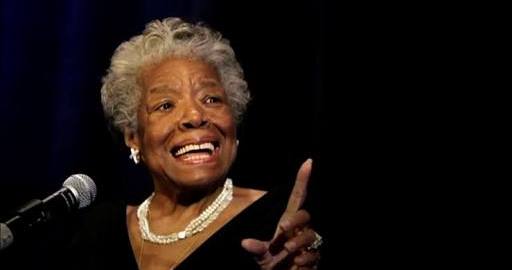

For him it brings extraordinary noise. It is as if he is about to explode and shout from his compressed thin lips. His eyes are wide open, looking into the distance, hardly noticing anything happening around him: his untidy lodgings, his scattered notebooks with barely legible marks on them.

He is composing, or more likely correcting a proof, pen in hand. The book is not resting on the table, but held up to the pen as if to give closer connection with him.

He is in fact well-connected in society, which recognises his unique talents, but he has never been able to capture the love of a woman despite several serious efforts. There is perhaps loneliness in his eyes and face because of this.

He is capable of charm, but certainly is not someone you would invite to a child’s birthday party. His business depends on the chattering classes of Vienna buying copies of his printed music as they would buy books. He was the first composer to use this business model successfully. He cultivated his clientele by offering piano lessons which must have demanded huge patience from a super-talented player as he.

His long straggly hair covers his ears. What use would there be to expose them? By the time of this portrait he was completely deaf. Buzzing started when he was about 26. He had lost 60% of his hearing by the age of 31. By 46 his was stone deaf. This is why he inspires me. He never gave up. He eventually had to stop conducting and piano playing. But he wrote and wrote. He continued to compose and innovate. It was all in his head. He never heard a note of it for real. His 9th Symphony is about peace between all men after the long Napoleonic wars. Peace.

And now I ask you please to take 27 minutes of your time and listen to his Piano Sonata 32. His last sonata. It is also about chaos turning to peace. In particular please listen to the second movement, which starts slowly, and which, for me, is his thanks for the world-beating talent he was given, even though his hearing was taken away. He never ever heard this on a piano but only in his head. I give thanks that I can hear it in both.

https://youtu.be/1ljq4MwzAbo : Claudio Arrau – Beethoven Sonata No. 32

The Fixer

The butterfly most wants the open flower

Which brightens life with pretty petals sweet.

He flies in wonderland  from hour to hour,

He settles short to taste the nectar treat.

His friends call him The Fixer, helps them grow.

The blooms in need of air from beating wings

Which fan them, light them, teach them how to glow.

They flourish in the happy songs he sings.

His heart is too full up for loving Ginge.

His wings are dusty,  shaky, losing lift.

Dust –  which keeps him flying – wearing thin.

The hurt, the pain he never meant as gift.

So while he tends his petals’ wild cries

Still he loses loves worth more than life.

Afghan girl

http://edition.cnn.com/2015/03/23/world/steve-mccurry-afghan-girl-photo/

Getting into Project One of Part Two which is about characterisation. First we get a photo of someone we don’t know and write a little description of the person. Here’s mine.

The girl was about twelve years old. As I walked past she looked over her shoulder, straight at me. Her face was grimy as if it had just finished a dusty, sweaty journey. Her skin beneath the grime was smooth and orange-brown. Burnt umber. Her eyes startled me. Brilliant white with leaf-green, dark rimmed corneas and small pupils. Her hair was jet black so that it was not discernible under the rust coloured cotton headscarf draped loosely over her head and shoulders like the a hood. There were sparse flecks of intense gold in the cotton. Her eyebrows were thick, but flat, black and perfect. The straight, unturned up nose had a flat scar on the left of the bridge, slightly darker and redder, as if some skin had been planed off. The unsmiling lips were slender and slightly pouting in defiance. She was silent and still.

She looked at me with no curiosity for a second or two, then turned away from the sun to face forward. No hurry, nobody to see, nothing to do, nowhere to go. How could such ugliness have happened in the sight of this beautiful child?