Category Archives: Prose

The man who never gave up

beethovenThis inspirational German man started to become famous in his early 20s in Vienna. My first impression of him is intensity and anger. His face looks out, with sharply-arched eyebrows, but not in a frown, rather in concentrated passion and creativity. For some people this state brings great peace.

For him it brings extraordinary noise. It is as if he is about to explode and shout from his compressed thin lips. His eyes are wide open, looking into the distance, hardly noticing anything happening around him: his untidy lodgings, his scattered notebooks with barely legible marks on them.

He is composing, or more likely correcting a proof, pen in hand. The book is not resting on the table, but held up to the pen as if to give closer connection with him.

He is in fact well-connected in society, which recognises his unique talents, but he has never been able to capture the love of a woman despite several serious efforts. There is perhaps loneliness in his eyes and face because of this.

He is capable of charm, but certainly is not someone you would invite to a child’s birthday party. His business depends on the chattering classes of Vienna buying copies of his printed music as they would buy books. He was the first composer to use this business model successfully. He cultivated his clientele by offering piano lessons which must have demanded huge patience from a super-talented player as he.

His long straggly hair covers his ears. What use would there be to expose them? By the time of this portrait he was completely deaf. Buzzing started when he was about 26. He had lost 60% of his hearing by the age of 31. By 46 his was stone deaf. This is why he inspires me. He never gave up. He eventually had to stop conducting and piano playing. But he wrote and wrote. He continued to compose and innovate. It was all in his head. He never heard a note of it for real. His 9th Symphony is about peace between all men after the long Napoleonic wars. Peace.

And now I ask you please to take 27 minutes of your time and listen to his Piano Sonata 32. His last sonata. It is also about chaos turning to peace. In particular please listen to the second movement, which starts slowly, and which, for me, is his thanks for the world-beating talent he was given, even though his hearing was taken away. He never ever heard this on a piano but only in his head. I give thanks that I can hear it in both.

https://youtu.be/1ljq4MwzAbo : Claudio Arrau – Beethoven Sonata No. 32

The bars of a song


A romantic man kept a very beautiful song bird. When the bird sang sweetly to him everyday his heart lifted. The vibrant colours of the bird’s plumage, which he took good care to preen often, delighted the man and many others.

The man pondered what he could give to the bird to make him happy to stay. He made a beautiful cage with a special perch, spray-painted in the birds favourite colour of black. He found the bird the best food, cared for him if he was ill, and tried his hardest to ensure his every need was met.

One day, an injured young bird flew onto the wind sill. The two birds talked and soon became friends, in fact more than friends. The song bird longed to be as free as his bird friend was. He longed to see the world and experience all parts of bird life. His bird friend was very ill and the song bird hoped he might fix him in this way. He didn’t mention any of this to the man.

So he became sad. His feathers, the envy of all the man’s friends who saw them, became flat. Before they had been iridescent. With the man, the song bird’s singing became rarer and the songs more sad. He changed from major to minor. Some of the songs became less true to life. The man noticed this, and wondered desperately how he could make his precious bird happy again. So he asked him the question.

The song bird thought carefully before answering – worried that he might upset the man, or might lose his place in the man’s life, or even worse in his heart. But the longer he waited to explain the truth, the more upset the man would become when he eventually knew the story.

Finally he plucked up courage and asked if he could fly out of the window, find his bird friend and fly away so that they could see the world together, see other bird life, have fun.

The man was upset that this was the first he had heard of the story, but said of course he could. He opened the cage door, threw open the window and stood aside to make way for the bird with no hesitation.

The song bird flew to the nearest tree, then sang out to tell his bird friend that he was free. His bird friend joined him quickly, and they took off. It was breezy and rough weather outside, but they stuck together and looked after each other. The song bird kept his bird friend under his wing.

They did everything and anything they wanted to. They were free. They made many happy memories. The song bird had happy memories too of the man.

The wind blew them to some good places, but also to some dangerous caves with highs and lows, which seemed fun at the time but were not in the real world. The highs and lows eventually caused more pain to the birds and their loved ones than the momentary fun was worth. The real world became more difficult to navigate. They started to avoid the bad places as much as they could, but it didn’t always work out like that.

The song bird missed the man and the merry times they had had together. He missed the man’s intelligence and wisdom, which he had always loved. They too had been through highs and lows together and the man had been trying to show his song bird how to live and prosper in the real world, by setting a worthy example. The song bird wanted to go home.

Again the song bird became worried, this time that his bird friend would be upset if he spoke the truth. But he decided that he really wanted to see the man again.

He told the bird friend, who had heard a little about the man but had never met him properly. He did not realise the love the song bird had for the man, nor that the man loved the song bird so much.

So the song bird turned into the wind and headed back, his young bird friend was very sad.

The song bird was now anxious. Would there be a new bird in the man’s life? Would the window be closed to him? Would his cage be locked?

Despite all these anxieties the song bird knew now what he wanted. He knew what he had to do. But he summoned up his considerable courage, fought the panic, and took the risk.

He finally reached the man’s place and landed on the window sill. Yes, the window was open as before. Indeed, the man had never shut it. Inside, the cage was still there clean, tidy, with fresh food and water for the thirsty song bird. It was safety.

There seemed no other bird in sight or sound. It was as if the song bird had never left. He smelled familiar odours of the house, the man’s aftershave, the aromas of his cooking. He heard the snoring upstairs.

He sat on his comfortable perch, put his head under his wing and he slept for the first time properly that night since he had left on his trip.

In the morning the man came into the kitchen as usual for his solitary breakfast. He played some of the song bird’s favourite songs on YouTube. For this was the song bird’s way of communicating his emotions which otherwise he found difficult to do. Listening to the songs was the way the man kept the song bird alive in his mind.

The man thought that his ears were playing tricks with him as they did sometimes because of the bad times of the past. But he was sure he could hear another familiar and sweet voice singing along to the YouTube songs.

His heart missed a beat. He dared not believe or hope what this might mean. He turned his eyes, red, brimming with tears, scarcely able to see, to the cage.

There sat his beloved song bird on the perch, somewhat bedraggled from the caves, but singing along to the songs.

Bird friends flew around outside calling. The cage door was open. The window was open. Yet the song bird sat there on the perch. Free.

From then onwards, the song bird sang to the man and made him happier than he had been in his whole life.

Now the song bird sang through the bars of his songs and never again through the bars of his cage.

Thailand

It’s a place which you can come to to relax and forget about the stresses of life. The beaches are sandy, and the turquoise sea shines like Thai silk. But the stresses are in your head and body, and so in fact they come with you wherever you go.

To get the most from friends, boyfriends, relationships of any sort, you must drain your soul of stress and conflict before you seek to travel. Then you can rejuvenate, recharge, relax. There is only one way to drain them -be honest with yourself and others about your priorities.

Of course if you are honest with yourself and others you may not get your holiday. You may not keep your friends,  boyfriends, and  loved ones. But if they really love you they will love you more for it.

And then your stresses and conflict will be drained,.


Afghan girl

http://edition.cnn.com/2015/03/23/world/steve-mccurry-afghan-girl-photo/

Getting into Project One of Part Two which is about characterisation. First we get a photo of someone we don’t know and write a little description of the person. Here’s mine.

The girl was about twelve years old. As I walked past she looked over her shoulder, straight at me. Her face was grimy as if it had just finished a dusty, sweaty journey. Her skin beneath the grime was smooth and orange-brown. Burnt umber. Her eyes startled me. Brilliant white with leaf-green, dark rimmed corneas and small pupils. Her hair was jet black so that it was not discernible under the rust coloured cotton headscarf draped loosely over her head and shoulders like the a hood. There were sparse flecks of intense gold in the cotton. Her eyebrows were thick, but flat, black and perfect. The straight, unturned up nose had a flat scar on the left of the bridge, slightly darker and redder, as if some skin had been planed off. The unsmiling lips were slender and slightly pouting in defiance. She was silent and still.

She looked at me with no curiosity for a second or two, then turned away from the sun to face forward. No hurry, nobody to see, nothing to do, nowhere to go. How could such ugliness have happened in the sight of this beautiful child?

Blank Dream

In his dream he had lost short and long term memory. It was an ordinary day at home but he did not recognise anything around him. The walls, the rooms, the carpets, the pots and pans in the kitchen were things which he saw for the first time. He spent hours picking items up, examining them, trying to work out what they were about. Finally his neck muscles began to give way involuntarily and he felt he was drifting. He got into bed hoping he would wake up and remember.

Now he lay awake, the sheets wet with sweat. There was no light. There were no shadows, no flickering tree shapes on the walls, nothing. He stretched out his right hand in slow motion, the fingers loose. It came to rest on a flat surface at the same level as the bed and beside it.

On the table, under his palm, he felt a sharp-edged oblong box, the size of an oyster shell he thought. But it was not rough like a shell. He picked it up. It was smooth and tacky under his thumb and forefinger. He felt the surface move like a skin across the more rigid face below. He squeezed the narrow edges and felt resistance. He tried to pinch the wider faces together and they gave, then sprang back as he released his pincer hold.

Towards one end of the box there was a break in the skin and, below, a thin, linear gap which opened as he pressed his thumb on one side of it and made a dull click as he flicked at it. Moving his thumb across the gap he felt the top edge of the box tilt away from him. His thumb slid into the opened mouth and he felt a row of tubular teeth, regularly packed like piano keys, rigid but slightly spongy. He lifted the box to his nostrils and sniffed inside. The smell was comforting, mellow, warm, like a cake cooking. He opened the box a bit more and extracted one of the teeth. It was longer than he expected. A thin, dry, long cylinder. He licked it. The curved side seemed to suck saliva from his tongue and he had to peel the tube off it. As he licked the end of the tube, shreds like dried grass stuck to his tongue. They were bitter and woody when he bit, and a little minty.

This box and its contents felt and smelled familiar but he had no idea what it was. He must have put it there by the bed himself because he felt quite alone where he was. He couldn’t remember. He wanted so much to be dreaming.

Marcelle’s Mug

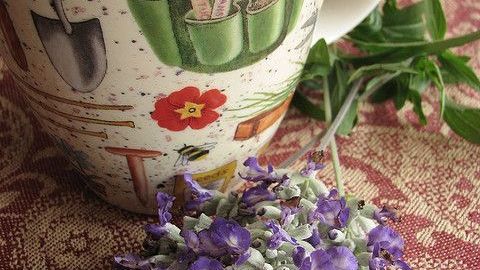
I drink tea from this mug at my father’s. It’s one of a matching set of four. Of course he didn’t buy it – my mother did. It’s very her. More slender than your regular mug and taller, with a splayed trumpet mouth reaching out.

On the outside the off-white china is illustrated with painted gardening pictures in leafy, woody, earthy colours with mushy pea green foliage. They look like the effortless drawings she did for us as children. Each item is labelled like a vocabulary exercise: spade, fork, tomatoes, herbs, wellies, water, seeds.

The inside is now beige-stained. A potted bay bush rises over the tea horizon as I drink. Just as she, in her tall blooming elegance, rose above the standard suburban household stuff to something special.