Meryl Streep Reads “Morning Song” by Sylvia Plath
Meryl Streep Reads “Morning Song” by Sylvia Plath
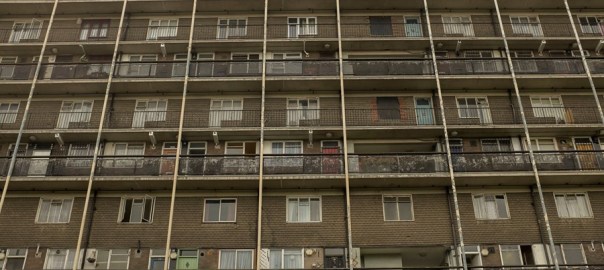
Arthur sits alone at the oak dining room table looking at black and white family photos on the wall. Autumn sunlight from the French windows makes them glow orange. Library books lie in neat piles, unread. Crosswords cut from The Daily Mail but left undone are clipped onto a board behind a sharpened pencil. A pork pie from yesterday lunchtime sits on a side plate, half-eaten.
There is a knock at the door, followed by the clicking of a key turning in the lock. His daughter, Sue, comes in smiling, carrying an armful of clean laundry.
‘Hi Dad.’
‘Oh, hello dear… was I expecting you?’
‘Yes, you were. Of course you were. It’s Tuesday.’
‘Is it?’
She sighs and looks out of the window to see the last remaining leaf on the sycamore tree in the back garden fall onto the lawn.
‘You need to get dressed Dad. We’re at the doctor’s in fifteen minutes’.
‘Right-oh dear.’
At the surgery, they sit in the waiting room until the nurse calls them in.
‘Hello Mr Saunders,’ says the nurse.
‘Have we met?’ he says.
‘Oh yes. We see each other every week. Don’t you remember?’ she says. ‘For me to check your blood pressure.’
‘Do we?… Yes, so we do!’ He smiles.
Sue can’t help rolling her eyes and gives her bobbed hair a wipe over, her palm coming to rest propping up her forehead. The nurse glances at Sue as she takes Arthur’s blood pressure and the machine bleeps.
As they get up to leave she touches Sue on the arm gently.
‘Are you alright?’
Sue looks at her. A tear beads in the corner of her eye.
‘Thought not,’ says the nurse. ‘Cup of tea?’
Arthur tucks into a chocolate digestive biscuit and sips his tea. ‘Mmmm,’ he says.
Sue and the nurse talk about what the nurse calls ‘difficult choices’. Arthur listens without appearing to. In the past month, it’s been getting worse. Sue doesn’t know how much longer will he be able to live on his own. He drives her mad, but she can see no way out of his living with her and her family.
‘Couldn’t you get a carer in?’ the nurse asks.
‘We can’t afford that. Anyway, I’m not sure he would like a stranger coming in,’ says Sue.
‘Depends on who it is,’ says Arthur, cutting in.
‘Wait a minute,’ says the nurse, picking up a local paper from the table in the waiting room. ‘What about this?’
She shows Sue a small box ad towards the back of the paper.
Caring Sharing
Home Share Agency
If you are a senior wanting company
Or a young person wanting a room
Call us on 010-244-6231
Sue decides to call the number when they get home. She finishes her tea, pulls Arthur away from the biscuits, and they go out to the car.
Back at Arthur’s there’s no time like the present. She calls the number. A polite young man answers straightaway and he tells her all about the home share idea. It’s brilliant. Young people can’t afford to buy or rent their own places so close to London, and older people on their own want company and some help with the chores. Matches made in heaven. She makes an appointment for the next day.
They set off in Sue’s Volvo. He’s dressed in the clean clothes she laid out for him on his bed. A clean handkerchief pokes out of his pocket. His hair is brushed.
‘You’re sure you’re OK with this Dad?’
‘Yes. I’m looking forward to it. Nice trip out.’
‘They’re going to ask you lots of questions. Please try to sound normal,’ she says.
Arthur turns and gives her a look. ‘What do you mean normal?’ he says.
He wonders if he’s ever been normal.
The young man on the phone is at reception. He’s maybe twenty-one or twenty-two, skinny, smiley, with smooth, coffee-coloured skin and tight, curly, black hair.
He says, ‘Arthur! Can I call you that?’
Arthur nods.
‘Cool! I’m Karl. I’ve been looking forward to meeting you.’
Arthur’s eyes open wider. ‘Erm… Good morning… Karl.’
Karl steps round the reception desk and takes them over to some plush armchairs arranged around a coffee table. Once Arthur has arranged his coat and stick by his chair, Karl passes him some papers.
‘OK Arthur, I just need you to fill out these details for me,’ he says. ‘I can do it with you if you like. No problem.’
Arthur smiles thinly at Sue. Karl explains that it’s a bit like a dating agency. They will try to match Arthur up with someone suitable for him. For the best chance of a match he should only tick the attributes he feels most strongly about. Each tick narrows down the field.
Sue surveys the many testimonials on the walls. Successful matches did occur somehow.
Karl pulls up to Arthur’s chair and reads out each attribute to him, then ticks it if Arthur wants to specify it. Karl certainly has a way with him. They chortle together as they work down the sheet.
A week later Arthur gets a call from the agency. They put all his ticks into the system, and the perfect match turns out to be Karl the receptionist who is looking for a place himself.
Arthur, Sue and Karl meet in a pub the next day. Arthur likes pubs. Sue says it’s the only time he comes alive. She has a Pinot Grigio, Arthur has a glass of house red, and Karl has a Malibu and Coke. She goes to the ladies’ room before they settle down.
Arthur leans over to Karl. ‘She’s told me not to talk about you being black.’
‘That’s good,’ says Karl. ‘Because I’m not black. I’m mixed race.’
Arthur raises his eyebrows. ‘Oh… any Anglo-Saxon in there?’
‘Anglo-Saxon is about as common as you can get actually,’ says Karl. ‘So yes, probably.’ He looks Arthur in the eye.
‘Yes… I suppose you’re right, now I come to think of it.’ Arthur leans back as Sue returns to the table.
Sue is keen to set some boundaries, as she calls them. Karl calls them rules, but he goes along with it. They talk about (not) coming in late, (not) bringing friends back, chores, TV, noise, use of the garden, laundry, cooking and money. Karl listens as she goes down the list, nodding. Arthur says nothing.
Karl says,’ OK, and what about my boundaries?’
‘What do you mean?’ she says.
‘Well, I reckon you’re getting a pretty good deal here, Sue. I look after Arthur here for you. You don’t have to be around so much. He gets some company (and trust me, he will now). So, don’t I get some boundaries too?’
Arthur puts his glass down, smiles to himself, and looks at Sue.
‘Well yes,’ she says. ‘I suppose so…’
‘And shouldn’t our boundaries be about me and Arthur? Rather than about you?’ says Karl. He turns to Arthur. ‘Is that OK with you, man?’
Arthur says, ‘Yes… That’s OK with me… man.’
A week later Karl moves in. He chooses the room looking down on to the garden – he likes the idea of waking up to the sounds of nature. He carries a suitcase, a laundry bag (half full), a huge, bubble-wrapped flat-screen TV, a crumpled lampshade with burn marks on it, a laptop in a case and a plastic packing box full of pens, pencils, crayons, brushes, paints and paper.
Arthur is sitting in the hallway watching these items as they pass by and up the stairs. Sue stands next to him shifting her weight from foot to foot.
‘Mind the paintwork, Karl!’ Arthur says.
‘Don’t worry Arthur, I’m good at this. I’ve been moving this stuff around for years,’ says Karl.
Arthur and Sue hear bumping upstairs as Karl sets things down and shoves them into place. He’s talking to himself very quickly in a syncopated monotone.
‘What’s he saying?’ asks Arthur.
‘I think It’s rap, Dad.’ says Sue.
‘Crap?’
‘No! RAP.’
They have a month to see how it works out. The next day Arthur gets up as usual at seven. Karl doesn’t. He has to get to work by ten and ends up rushing out of the front door eating a piece of toast at nine-fifty. Arthur gets up to close the door behind Karl, shaking his head. Karl leaves a smell of coconuts in his wake which Arthur quite likes.
When he gets back from work at five, Karl carries in some groceries in plastic bags.
‘Ready for some tea Arthur?’ he says.
‘It’s a bit early for me to be honest. I usually go up the pub for a glass of red before dinner. Could we do that first?’ says Arthur.
‘OK, as long as I can have a bag of crisps – I’ll be starving otherwise,’ says Karl.
The pub is too far to walk but not really far enough to drive. Nevertheless, they go in Arthur’s blue Fiesta. As they walk in under the gaily-coloured flower baskets the chatter inside goes down a notch.
‘Usual, Arthur?’ says Tom the barman. Arthur nods.
‘Nice lad, the barman. I’m not sure about that tattoo on his neck though,’ Arthur says, a bit too loudly, to Karl over his shoulder. ‘What would you like anyway?’
‘Oh… just a Coke please,’ says Karl. ‘And a packet of cheese and onion.’
They take the drinks over to a table in the bay window next to a log-effect gas fire.
‘I love it here, ‘says Arthur. ‘It’s a real village pub. Not many of those left you know.’
Karl takes this in. Everyone looks well-off, well-fed and white. A group of late-middle-aged men crowd at one end of the bar. They are wearing garish, multi-patterned sweaters and trousers. They greet Arthur.
‘Oh my God. What have they got on?’ says Karl.
Arthur laughs. ‘They’re golfers.’
‘Do you play golf then?’ says Karl.
‘Oh, I used to, yes, of course. Not for a bit now though. My knees can’t take it any more.’
‘In that gear?’ says Karl, sniggering.
Arthur doesn’t want to go into how you can tell a lot about a man from his choice of golf clothes: it has got him into trouble before in here.
On the way home in the car, Arthur suddenly thinks how quickly today has gone.
Inside, Karl cooks them some sausages and mash which Arthur tucks into, making this-is-tasty noises. They chat about Arthur’s family. His wife of 60 years died three years ago. Sue is their only child. She can be a bit edgy, intense even.
Karl says he thinks Sue is lucky. He doesn’t know who his father is; never met him, doesn’t know anything about him. His mother lives in Brixton with his younger brother and sister. She is a cleaner. He doesn’t see much of them. His mother works long hours and the children go to his auntie’s most of the time.
Arthur says, ‘I’m sure she’d like to see you, even so. She must get lonely sometimes.’
‘I s’pose,’ says Karl, picking up the remote. ‘What’s on TV tonight?’
On Friday night, they are in the pub again. Karl is starting to enjoy this part of their evenings. Arthur is not saying much and gazes out of the window. Karl says, ‘Alright?’
‘Yes. Yes. I was just thinking about our chat the other night. Look, would you like to see your mother tomorrow? I mean… we could go. In the car. You know? It’s not that far.’
Karl looks up suddenly. ‘Look! I haven’t been back there for over a year now. There’s a reason for that. Leave it, man, OK?’
The golfers fall silent for a few seconds, twisting round to look at them.
Arthur puts his hands up. ‘OK, OK!’ he says, trying to contain his voice in a whisper.
Karl sucks his teeth and shakes his head. He finishes his Coke and stands up. ‘I’m going to walk home. Don’t wait up for me.’ He strides out of the door.
Arthur finishes his red wine and gets in the car. Oh dear. He was only trying to be helpful. There’s no sign of Karl on the way home. He lets himself into the dark house. He doesn’t feel like eating, but there’s no point in going to bed. He won’t sleep anyway. He turns on the TV and sits with a rug over his knees. The evening has become heavy.
Arthur wakes in his chair. Eleven o’clock. No Karl. He goes upstairs to bed.
In the morning, he goes down to make a cup of tea. Should he knock on Karl’s door? He doesn’t think so. That was one of the agreed boundaries. What if Karl doesn’t come back? Or what if he decides to move out? Arthur rests his head in his hands on the table.
Just then, there is movement upstairs. Arthur lets out a long breath and looks up. He hears footsteps coming down the stairs, and Karl walks in. They look at each other. Karl nods hello. He sits down opposite Arthur. ‘You gonna make me a cup of tea then?’ he says. He smiles.
‘I’m sorry I upset you last night,’ says Arthur, avoiding eye contact. ‘It’s none of my business. I should never have brought it up.’
‘No, Arthur. I’ve thought about it. And you are right. I should go and see her. It’s been too long.’
Arthur raises his eyebrows.
‘Anyway. I thought you weren’t good at remembering conversations the next day.’
‘Oh no. I remember them. If they’re worth remembering, that is.’
They find themselves outside in the Fiesta at ten o’clock. Karl says he knows the way from Brixton station, so they are going to head there first. Arthur gets the map out of the glove compartment and puts it on Karl’s lap. ‘Pretty straightforward really,’ he says, pointing out the route with the end of his car key.
‘We’ll see!’ laughs Karl, who has not done much map reading before, except on the tube.
‘How can you get through life without looking at a map?’ says Arthur.
Arthur hasn’t been to South London for a long time. He was born, and grew up there.
Karl can’t imagine Arthur as a boy.
They reach Brixton without mishap.
‘Arthur, do you mind if we stop for a coffee before we get to my mum’s?’ says Karl.
Arthur looks at him. ‘Are you sure you want to do this?’
‘Yeah, yeah. I just need to get my shit together first, man. You know.’
They park in a side road and find a small cafe on the corner. They sip cappuccinos and Arthur tackles a slice of Victoria sponge. He watches Karl as he looks out of the window at the passers-by. ‘Nervous?’ he says.
‘Not really. It’s just … a lot’s happened round here for me,’ says Karl.
‘Me too,’ says Arthur. ‘I used to cycle past here every day on my way to school. I don’t think I would do that nowadays.’
Karl smiles. ‘I used to walk to school. When I went, that is. I hated it. Most of the time we just used to bunk off.’
Arthur says, ‘On the subject of bunking off, Sue’s a bit put out I think.’
‘Oh, why?’
‘I think she is surprised I’m with you… doing this. I normally go over to hers today. I spoke to her while you were getting ready.’
‘Maybe she’s jealous,’ says Karl.
Karl’s mother lives in a council tower block a few minutes away from the cafe. They pull into the parking area. Arthur has never been in a tower block before and he’s looking forward to the ride in the lift.
‘You’ll be lucky!’ says Karl. ‘It’s never working.’
But it was.
When she answers the door, Karl’s mother is short but large, in a floral apron. Her round, red-rimmed eyes open wide and her mouth sags, soundless. She has no phone. She had no idea Karl was coming.
‘Hi Mum,’ says Karl.
She is crying, tears rolling down her cheeks. Her whole body seems to heave with her sobbing. Her ample arms fold Karl’s head into her neck so that he is bent over as if at a drinking fountain.
‘Mum. This is Arthur. Arthur, this is my mum, Lydia.’ He hadn’t really thought about what to say next. ‘Erm… Arthur is my…’
‘… friend,’ says Arthur. ‘Look, I can wait in the car, Karl. It’s no problem.’
‘You will not!’ says Lydia, standing back from the door and wiping her cheeks with the apron. ‘It’s nearly lunchtime. You must stay. Karl! Move those toys off the sofa so your friend can sit down.’
‘Can I look at the view first?’ says Arthur.
They stand in a row: Arthur on the left, then Lydia, then Karl, looking out of the wide east-facing window. She holds both their hands.
They stand staring at the scene below in silence, connected. A sycamore leaf wafts past the window, caught in an up draft.
Lydia squeezes their hands. ‘When you’re down there it’s pretty ugly and dirty. From up here it always looks beautiful.’
I am sorry I haven’t been on here for a bit. There are many reasons for that, but none of them really good ones. So I am back.
I submitted the final assignment on Monday and got the feedback, as usual, very quickly from my tutor. YAY! She likes it. So now I will update the version on here to reflect her suggested amendments.
Next I am doing screenwriting. Looking forward to it enormously. Here are the details of the course if anyone is interested:
https://www.oca.ac.uk/courses/creative-writing-courses/creative-writing-1-scriptwriting/

In front of him, on the other side of the two-way loop, a yummy mummy sat in a booth at a table, dishes of pastel sushi under plastic domes circulating around her to electro-bubbly music.
Over her shoulder a weeks-old baby fixed his china-blue eyes on the passing feast, dribbling and puking snail trails on her left deltoid. She, unaware, was bent over her smartphone on the table, prodding and swiping with her free hand.
What could a lady who lunches possibly find to get busy with on a smartphone?
Hot-flush embarrassment rose through him as he realised he was doing exactly the same thing.

Breakfast in bed:
Bliss

A test recording lol
Despite the joy of you, I deserted.
Unworthy of respect or welcome, me.
You give me both, still, despite the hurt
I cause by being the man I want to be.
But come, enjoy this moment, there’ll be more,
Which add up to a future, day on day.
Now I love you more than ever before :
It doesn’t go from me without saying.
Stopping by Woods on a Snowy Evening by Robert Frost

For William John Symons (1892-1953)
I
11 September 1940 – Furneux Pelham, Hertfordshire
Eight at night, hot, sweaty, the rabbit
In the pot bubbling, the wireless crackling.
The news of bombs on London docks grabs
Your guts, mashes your mind, mood blackening.
A wave of shouting passes, and the slapping
Of hasty feet, of women and men,
With girls and boys who rush ahead of them.
‘They’re running to the schoolyard, come on Dad!’
Shouts Tony, full of steam, with tossing head.
You rush along with Doll, behind the lad ,
Past chink-free cottages and musty garden sheds.
The whole world’s woken up and left their beds.
You crowd into the schoolyard on the hill,
The stars are black-out bright , your heartbeat still.
The breeze is warm, the trees’ leaves tremble near.
Towards the South an angry glow grows red
And lights the crane spikes of the docks. You hear
The droning bombers’ engines overhead
And on your flesh, you feel the fear ahead.
The criss-cross beams of searchlights cast their net.
The flames flick through the far-off second sunset.
Weeks ago, you martialled East End children:
Your school was moving from the German bombs.
You herded them through Liverpool Street Station,
And counted them on board, one by one,
Their string-tied labels flapping cardboard tongues.
Tearful parents needed someone strong
To reassure that it was not for long.
You stand with their evacuated kids,
Who watch you now to see if you’re afraid
Of Jerry and his blitz. Your head forbids
The reeling-feeling dread of his invasion.
How can this all be happening once again?
You went to war, to end all wars, with friends
From Portsmouth twenty years ago. Back then
You didn’t fight to see them over here,
Buzzing, blitzing, bombing East End streets.
You didn’t hide in cellars, rank with fear,
To cower in shelters now while we repeat
The fight with Germans who you thought you beat.
So much for League of Nations, armistice.
Did we learn nothing, is it back to this?
‘Oh God, Bill,’ Dolly says, ‘What shall we do?’
‘We’ll carry on Love; I will teach my class,
You will fix the workers’ daily stew,
Tony will go to school – and this will pass.
We beat them once and we’ll complete the task
Again, you’ll see, no need to be alarmed.’
You hold their hands, look confident and calm.
To billets in the village, dark and drowsy,
The children stumble back along the lane.
‘What about our mums and dads, our houses?’
You tell them, ‘It’s all fine. Old Jerry’s aim
Was never any good – it’s still the same.’
‘You think all our bananas might be burning?’
‘I’m sure they’re not,’ you smile. Your stomach’s churning.
II
10 February 1906 – Portsmouth Dockyard
The champagne bottle bounces off the back
Of Dreadnought as she slips down to the sea.
It does not burst until the third hard crack,
The spume cascades down lapping plates of steel.
This ship shouts ‘Empire’, floating arrogantly,
Machine of mass destruction, steaming proud.
You stand with John, your dad, amongst the crowd.
His red eyes fill. You cheer and wave the flag.
He’s worked here for a year to build this beast,
A year of blood, sweat, toil and tears. Your dad
Came home for tea each day with tales to feast
Your ears on: welds, thick plates, huge guns; so pleased
The Royal Navy ruled the seas outright,
That none dare challenge our Great Britain’s might.
You’re working hard at school, you’re proving bright.
And John is proudly getting good reports
From teachers who can see the glowing light
Of promise in your eyes and give support
For you to leave the docks, the first cohort
At Portsmouth’s new college, where you’ll strive
For University in a few years’ time.
These teachers push you hard to give your all.
They inspire by what they do and what they say.
You grow in mind and stature in their mould.
Though short at five-foot-five, you can hold sway.
You rev yourself to make the getaway.
It’s clear you are a leader, and your dream
Of being a schoolmaster starts to gleam.
III
15 February 1915 – Luton, Bedfordshire
‘Your Country Needs You,’ so the posters say.
You wait in line to sign your name for war.
It’s one year on. So you know today
About the Western Front and what’s in store.
And yet you smile, you’re proud, you’re brave, you’re sure.
You all want to go and show the Huns
What happens when you anger British lions.
You are to join the Expeditionary Army
In France, this is the first time ever abroad
For you, a Portsmouth shipwright’s son, now tommy.
And what of trench-life truth will you be told
While training, bulling boots and getting cold?
Will early mornings, box-pinched beds, sharp creases
Help, when your mates get blown to pieces?
IV
29 November 1916 – Arras, France
Arras. The squeaking, creaking train pulls up.
It’s full of boys, young, single, just like you.
Fresh Royal Fusiliers are forming up,
Smooth-faced, feckless, reckless, hats askew.
Spotters fly, flimsy, over you.
The straight strips of stretchers line the track,
With smoking, blinkered boys who don’t grin back.
Sergeant Symons, a year on now from training,
You march the muddled men to join the ranks
Of comrades underground in chalky, shaking
Caves and cellars under Arras. The dank
Dark throws the thud of boot on plank.
The light bulbs flicker SOS across
Graffiti signposts on the road to chaos.
A city underground. You share the stench
With rats and bats and lice and mice and men
English, Scots, Chinese, Canadian, French,
Welsh and Maoris digging to extend
The tunnels, through the chalk, beyond the trenches
To shield assaulting men from shells and guns
When they close in and bayonet the Huns.
You eat your scalding tins of bully beef,
You drain your rum until you are not here.
You dream of strawberry jam and clotted cream.
You’re missing Martha’s bread and warm, flat beer.
Your mind makes green and placid fields appear.
Above, the weather worsens every day:
The snow and driving rain will melt the clay.
On last night’s raid, you saw a mud-drowned man.
He’d slipped off duck boards into sucking muck,
His face mud-masked. The filthy, clawing hands
And febrile fingers of a sitting duck.
The eyes glared through his death mask, terror-struck.
All this, illuminated by the flares,
Is the hell to which you climb, up white chalk stairs.
Rumours from the East of revolution:
The Russians might well pull out of the fight.
The Easter Rising cranks up more confusion.
A fresh offensive must be now in sight
With talk of improved tactics every night.
‘It’s coming, Sarge. It can’t be far away.’
‘Maybe, but we’ll be ready, lads,’ you say.
V
9 April 1917 – Outskirts of Arras, France
(1)
Five days the guns have fired
On Germans buried just ahead
To ‘soften them up’ and cut their wire.
Under Arras thousands wait
And listen to the shrieking shells
As they bombard without a break.
Even in this citadel
Below the earth the guns burst through
Your ears, your head, your every cell,
Reverberate and numb you to
A gaping statue, ghostly white,
Incapable of thought, but you
Must do the rounds by candlelight
And buck the boys up with good cheer,
Give a hand if they can’t write
Their letters home to sweethearts dear
And praying parents back in Blighty
Who could never dream what’s here.
You’ve been above, in thundering night,
To see, through periscopes, objectives
For the hurling, howling, headlong flight
Right through No Man’s Land, (perspective
Altered by the lenses), close-
Seeming, so that this directive
To attack may be, who knows,
Not quite as stupid as it seemed
To you, this morning, when disclosed.
That’s what you tell the lads at least,
As you explain to them the scheme.
(2)
Now your boys are huddled round,
Ready to ascend to hell,
Muttering prayers against the pound
Pound, pound, pound of shells,
Crumpled pictures close to hearts
In pockets, as they try to quell
The body-trembling terror darts
Which fly from head to toe. Mr
Lamb, thumbs up, starts
Up the steps, draws his pistol,
Shouts, and out into the ditch.
You slap the backs of boys resisting.
‘Go on lads! Let’s leave this pit
And get some fresh air in our lungs!’
Your wit: they shake and smile at it.
Mr Lamb will lead Wave One,
Wave Two (with you) will give them cover
With fatal fire from Lewis guns,
Wave One down, then Two will be over
In the Boche trench fair and square,
And… finish off survivors.
There won’t be much left living there,
Once you have poked round everywhere.
(3)
Five thirty and they fire the flares.
Wave One spring up with Lamb and dash.
The creeping barrage bucks the air.
No Man’s Land erupts in flashes.
Earthen fountains fly sky-high.
You and Wave Two dodge the crashes,
Slam against a crater’s side,
Spray the guns to shield Wave One,
Then up again for one last time.
Wave One fires. Lamb is down.
Wave Two stabbing Huns.
You hit the ground. No-one around.
No sound… No sound.
No sound… No sound.
No sound .
VI
13 April 1917- Hotel Mont Dore, Bournemouth
Starched nurses butterfly-bob from bed
To bed, changing dressings, chatting, pushing
Men in chairs on parquet boards, heads
Bandaged, drinking cups of tea; shushing
Curtains, white, white, plumped-up cushions,
Surgical smells, rustling cotton sheets,
A vase of roses at your clean, dry feet.
The clipboard on the washstand next to you:
Shrapnel – head and thigh (Removed Calais).
Your leg is strapped up tight, your head is too.
A smoothly-spun, white turban overlays
Your thud-throbbing brain and half your face.
Around you in regimental rows
Lie shrouded human shadows, trying to doze.
You send a card to John and Martha so
They know you’re here and safe, not far away
From Portsmouth. When they come they’ll want to know
What happened outside Arras just four days
Ago, to you, and others, young and brave.
But how much can you tell them? Can you bring
The dash back to your mind, or anything?
‘Oh Son, what have they done to you?’ she says.
‘It’s alright Mum, it could have been much worse.’
‘Much worse than this?’ she gasps, as she lays
Soft hands on yours and John shouts a curse
On Kaiser Bill, which gets a passing nurse
To say, ‘Enough of that for now, Sir. Please!’
And John, back in his place, looks ill at ease.
‘They came to get me Dad,’ you wince and strain.
‘My boys came back to get me from the hole.’
‘It’s OK Son, don’t tell it all again,’
Says John. ‘You need to rest, forget it all.’
But that is easier said than done, your soul
Is scarred forever with that memory.
You want to go back soon across the sea.
‘We got there really fast across the gap.
At first I thought we might all make it there,
But Mr Lamb, in front, fell fast, poor chap.
I had to take the lead, get up and tear
Across the bursting holes and wire snares
And take my men to cover from the shells.
My ears felt full of shrapnel, and I fell.’
Martha folds her face as you recount
The story of the boys and how they helped
You into shelter, life in doubt.
‘Thank God they got the pieces of the shell
Out from your head and leg,’ she gulps,
‘You’re not going anywhere, my lad.
You’re staying put right here with me and Dad.’
They leave you now to rest, and you lie back,
But all you want to know is what’s become
Of your platoon, and whether the attack
Succeeded. Did the enemy succumb?
How many made it through? – Anyone?
No-one knows, or no-one wants to say.
One day you’ll know it all, but not today.
VII
11 November 1918 – 4th Officer Cadet Battalion, Oxford
You’re going to be a ‘temporary gentleman’:
The public schoolboy’s dying fast in France.
Of course, they’ll never think of you as genuine;
‘Not one of us, you know.’ They’ll look askance.
But for the war you wouldn’t get a glance.
Tomorrow morning you will be commissioned,
Second Lieutenant Symons (with conditions).
‘Gentleman; I have historic news!
The armistice was signed this morning, early.
The end of fighting! Eleven o’clock it’s due!’
The company commander leads the hurly-burly ,
Tears, prayers, cheers. But this will surely
Scupper all your plans of going back
To give the fight in France another crack.
VIII
1940 – Furneux Pelham, Hertfordshire
The war to end all wars did not. And so
You watch as London burns for months on end,
You see young men fall from the sky again.
But you keep cool, collected, even though
The scars you bear, the friends you left out there,
Must seem to count for nothing anymore.
Would you have made Headmaster without war?
Your wife, your son, your life all stem from there.
And now?
. . . . . . . . . . The echoes of those wars repeat:
Human bombs explode instead of shells,
Innocent civilians face the hell,
And soldiers, heads in hands, beg on our streets.
Much has changed today, and much…not yet
I hope you’re proud of us: we won’t forget.
 dagingadabetta